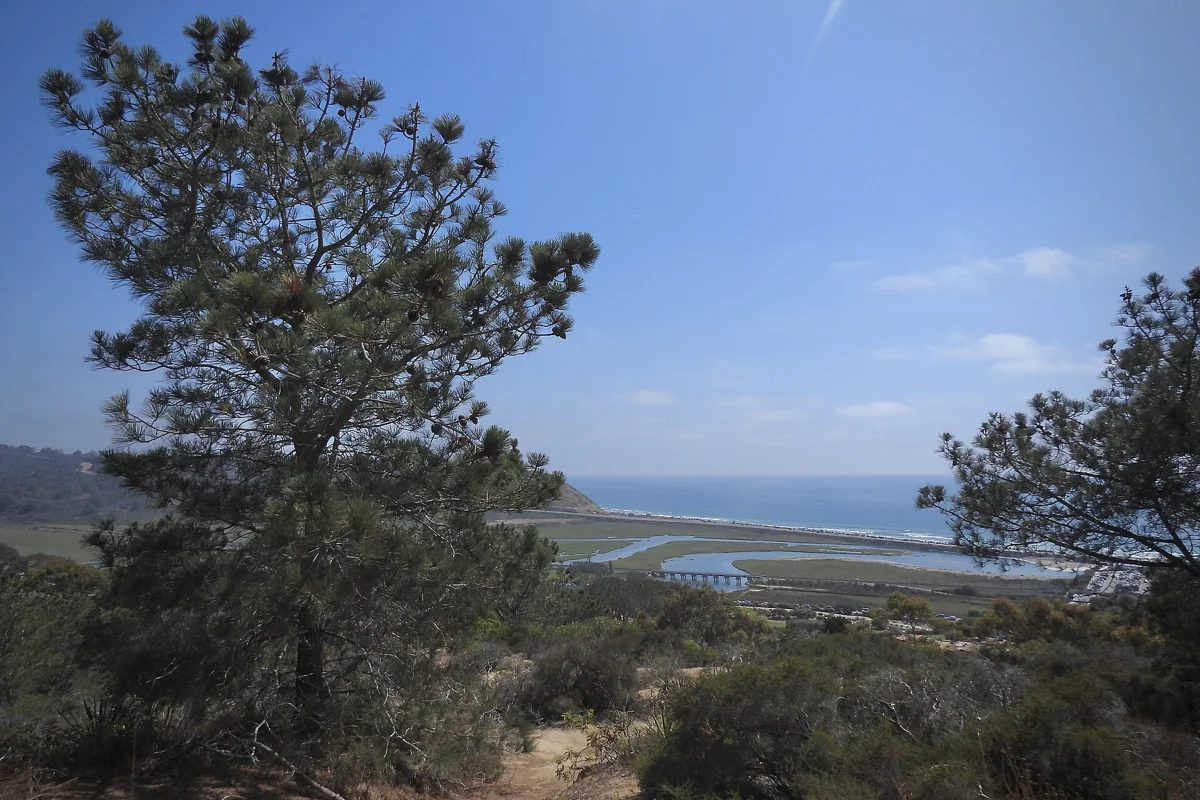
Torrey pines trees are the signature trees of Torrey Pines State Natural Reserve, but identifying a Torrey pine takes more than spotting a wind-bent pine beside the ocean. Look for needles grouped in bundles of five, then consider the cones, bark, overall form and location together. The species, Pinus torreyana, grows naturally in only two places: the San Diego coast and Santa Rosa Island in Channel Islands National Park.
That small native range makes an ordinary-looking tree worth a second look. It also makes the reserve a place for careful observation rather than collecting. You do not need to leave a trail, break off a needle cluster or bring a cone home to learn the main identification clues.
Where Torrey pine trees grow naturally
California State Parks identifies Torrey Pines State Natural Reserve as the mainland home of this rare pine. The National Park Service documents the other native population on Santa Rosa Island. A Torrey pine planted in a garden or along a street may be a perfectly genuine member of the species, but a planted tree is not evidence of another native forest.
Both agencies emphasize how restricted the natural distribution is. State Parks calls it the nation's rarest pine, while the Park Service describes it as the rarest native pine in the United States. Those are statements about the species' natural occurrence, not a claim that every pine in San Diego is a Torrey pine or that all of its living trees stand inside one reserve boundary.
For a visitor, the distinction is useful. Go to the reserve to see the relationship between the trees and their native coastal setting. Use a labeled botanical collection or reliable plant record if you want to identify an individual ornamental tree elsewhere. A location name such as “Pine Tree Beach” or “Pinetrees” on a travel page is not botanical evidence.
How to identify a Torrey pine
Start with a needle bundle you can see without touching the tree. Torrey pines have five needles grouped together at the base. Count the needles in one bundle, not five separate needles scattered across a branch. This is the clearest introductory feature described by the National Park Service, and it is much more useful than assuming a coastal tree must be a “beach pine.”
Use several clues, however. Five-needle bundles are not unique to Torrey pines across the whole pine family. In a landscaped neighborhood, an imported or planted pine may share that count. A confident identification should combine the bundle arrangement with the tree's cones, its mature bark and its documented location.
- Needles: look for five per bundle, checking more than one visible cluster.
- Cones: examine the substantial woody cones from a distance or through a camera zoom.
- Bark: look at the mature trunk as well as younger branches; bark changes with age.
- Form: notice how exposure and growing space affect the crown rather than expecting one fixed silhouette.
- Setting: use a native reserve or a reliable planting record to support the visual clues.
A useful photograph includes the whole tree, a view of the trunk, a clear needle bundle and any cone that is visible without disturbing the plant. One attractive silhouette is rarely enough for identification. Photograph what is naturally visible, and leave needles and cones in place.
Torrey pine bark, cones and coastal shape
Bark is a supporting clue, not a shortcut. The National Park Service notes differences between the two native populations, including thicker, scalier bark and rounder cones on the Santa Rosa Island form. That variation is a reason to be cautious with an identification based on one close-up of a trunk.
Likewise, a crooked or spreading tree is not automatically a Torrey pine. Exposure, available space and the circumstances in which a tree grew influence its appearance. State Parks describes wind-sculpted pines on the reserve's headlands. Look at several trees from the trail to appreciate that variation instead of searching for a single “correct” shape.
When comparing Torrey pine tree images, check the caption and source. A photograph of an island tree may differ from a mainland example, and a stock image labeled simply “pine tree” is not a trustworthy identification guide. Official park descriptions are a stronger starting point than a photo collection without species information.
The Santa Rosa Island population
The island trees are recognized by the National Park Service as a distinct subspecies. Isolation has produced differences from the mainland population, even though both are Torrey pines. The Park Service notes differences in crown form, bark, cones and needle color.
How the trees reached Santa Rosa Island remains an open question in the Park Service account. Suggested explanations include natural transport and transport associated with people, but the evidence does not settle the history. It is better to say that the two populations are geographically separated than to present one appealing origin story as proven.
Santa Rosa Island is not a nearby extension of a San Diego sightseeing trip. It requires a separate Channel Islands plan. For most San Diego visitors, the practical opportunity is to learn the mainland trees in their reserve and use the island comparison to understand why variation matters.
Seeing pine trees in San Diego without damaging them
Follow established routes at Torrey Pines and respect any temporary closures. Reserve status is meant to protect the whole environment, including soils and other plants around the trees. Stepping off the trail for a better angle can affect more than the plant you are photographing.
Do not strip bark, pick cones, collect needles or move branches for a picture. A living tree does not need to be handled to be appreciated. If a trail is crowded, move to a safe, wider spot before stopping to count bundles or change camera settings. Keep your observation from creating a bottleneck.
Carry water and plan for sun exposure. A coastal location is not a guarantee of cool walking conditions. Check the official reserve page for current visitor information, access notices and fees instead of relying on a tree-identification page for operating details.
A simple field exercise for families
Try a three-part observation from the trail: find a needle bundle, compare the outline of two trees and describe the bark without touching it. Ask everyone to separate what they can actually see from what they are assuming. “I counted five needles in that bundle” is an observation; “all pines by the beach are Torrey pines” is not.
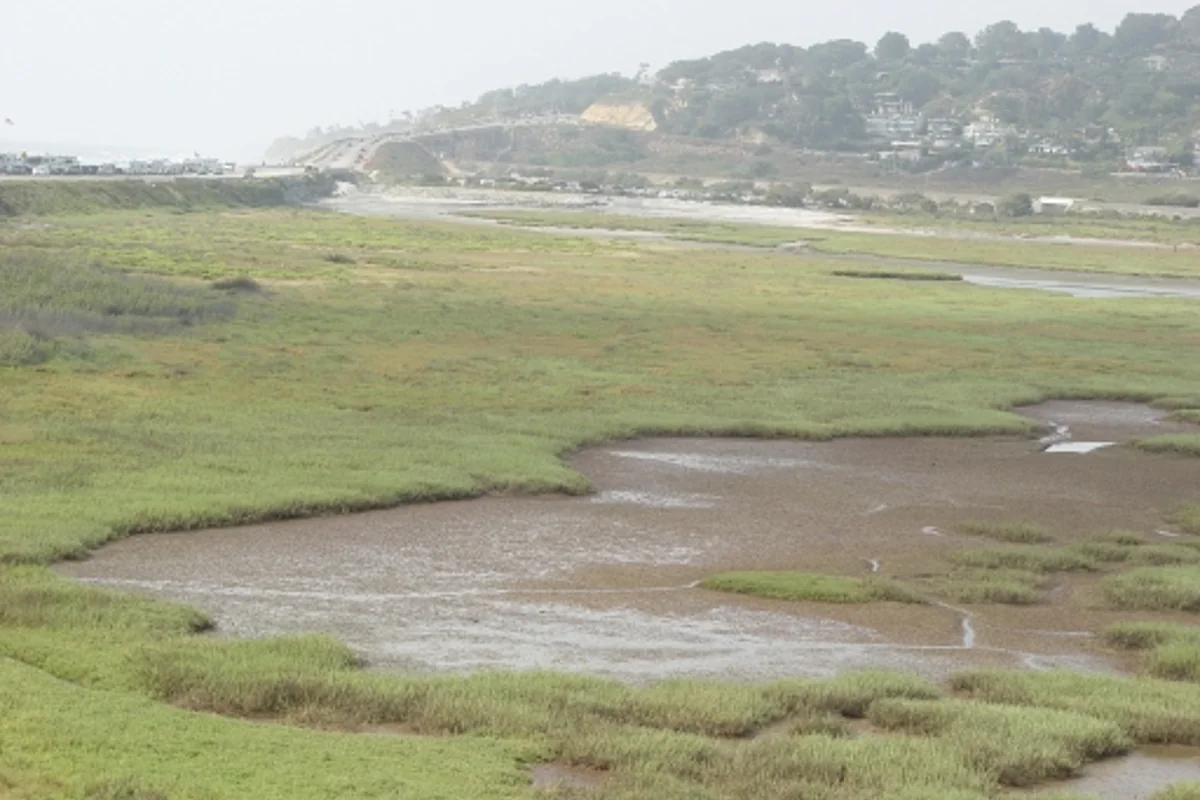
Next, look at the surrounding landscape. The reserve protects more than a collection of trees. California State Parks also highlights coastal habitat and Los Peñasquitos Marsh. That context helps explain why protecting a rare tree includes looking after the larger landscape rather than treating individual trees as isolated exhibits.
A sketch is a good alternative to collecting. Draw the branching pattern, add five lines for a needle bundle and note where the tree was viewed. You can compare your notes later with a trusted species description. The exercise works even when the most accessible tree has no easy-to-see cones.
Planning the rest of a Torrey Pines visit
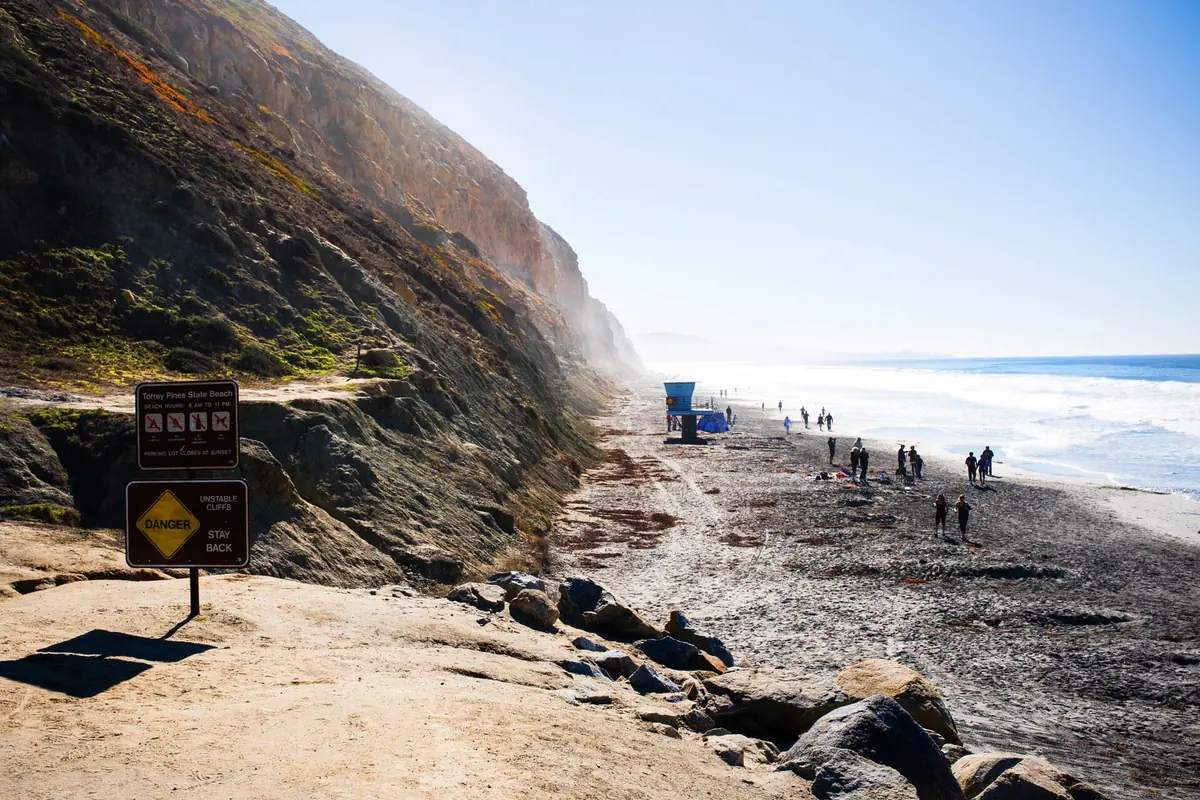
Do the tree watching at the pace your group can manage. A short observation from a maintained trail is better than a longer outing that pushes someone onto an unsafe slope. Keep the botanical goal separate from a beach goal: the reserve and adjacent state beach have different terrain and visitor considerations.
For the wetland side of the landscape, read our guide to natural lagoons and Los Peñasquitos Lagoon. For other coastal outings, start with coastal hiking. The most useful souvenir is a better eye for the next tree, not a piece of this one.
Sources & further reading
Official information and references for this guide. Check the source for current access, rules and conditions.