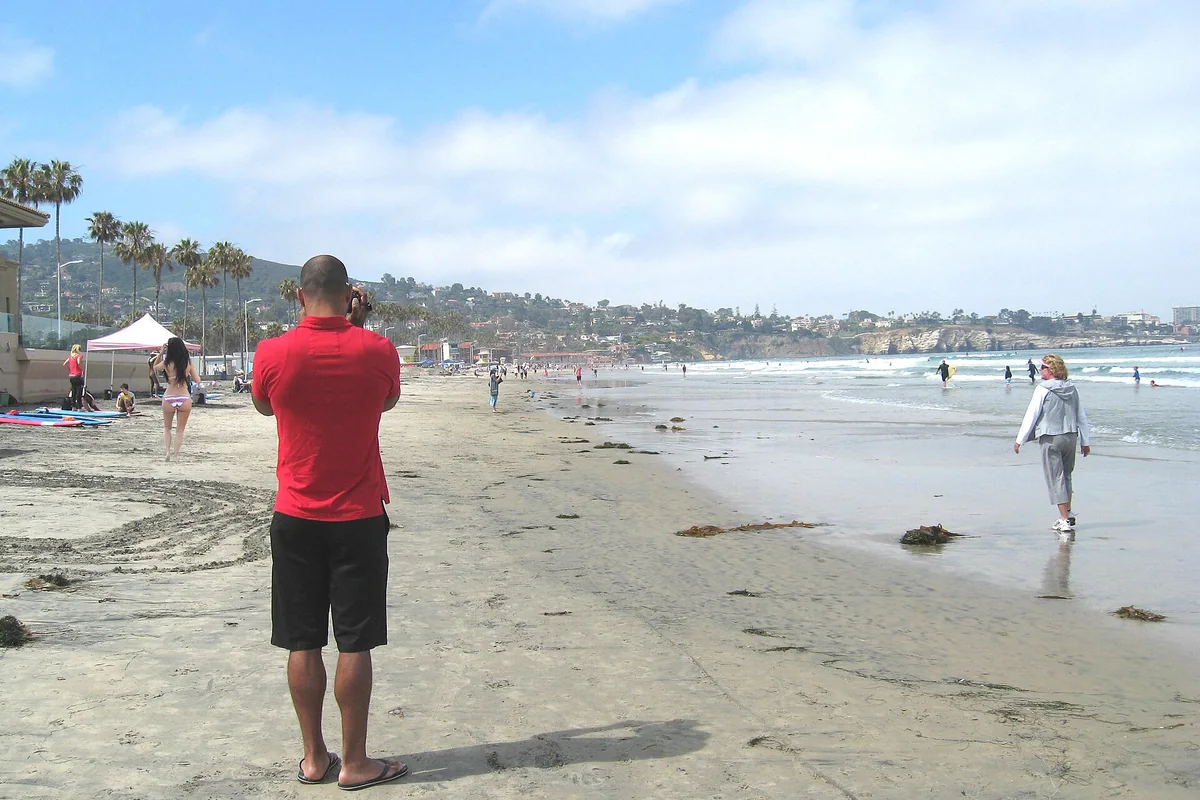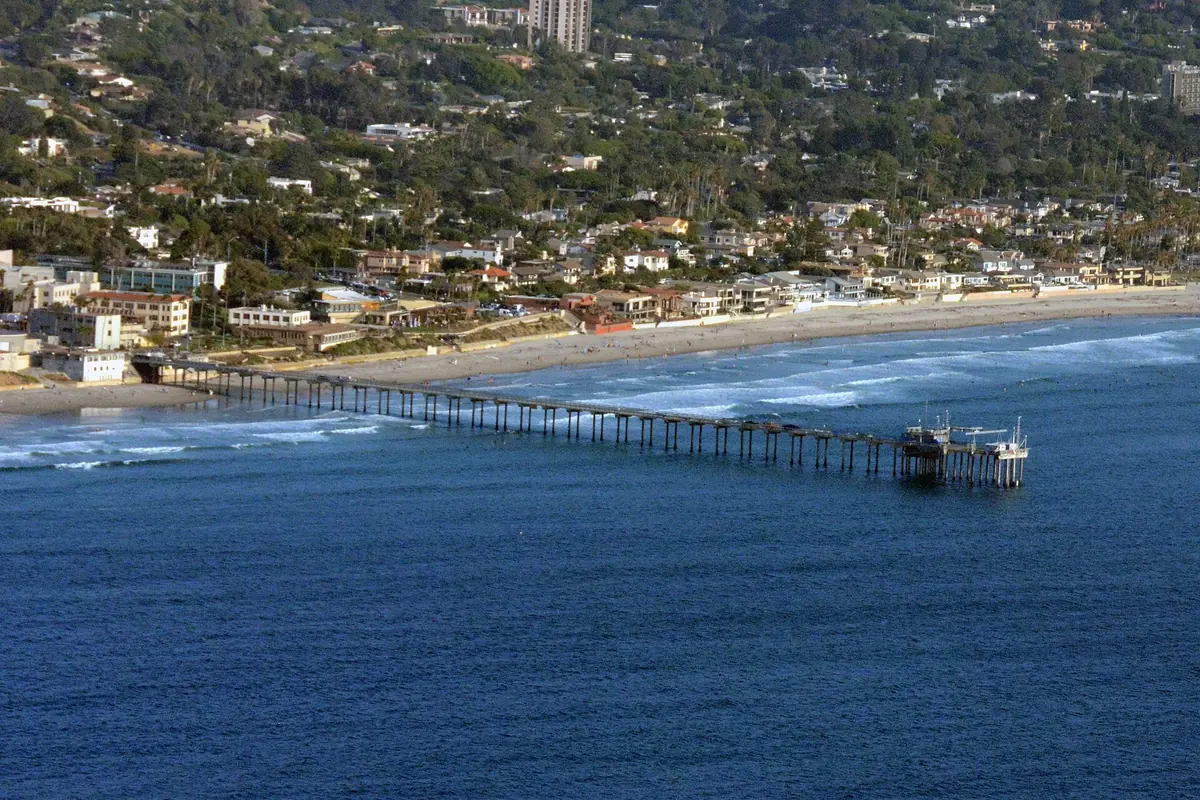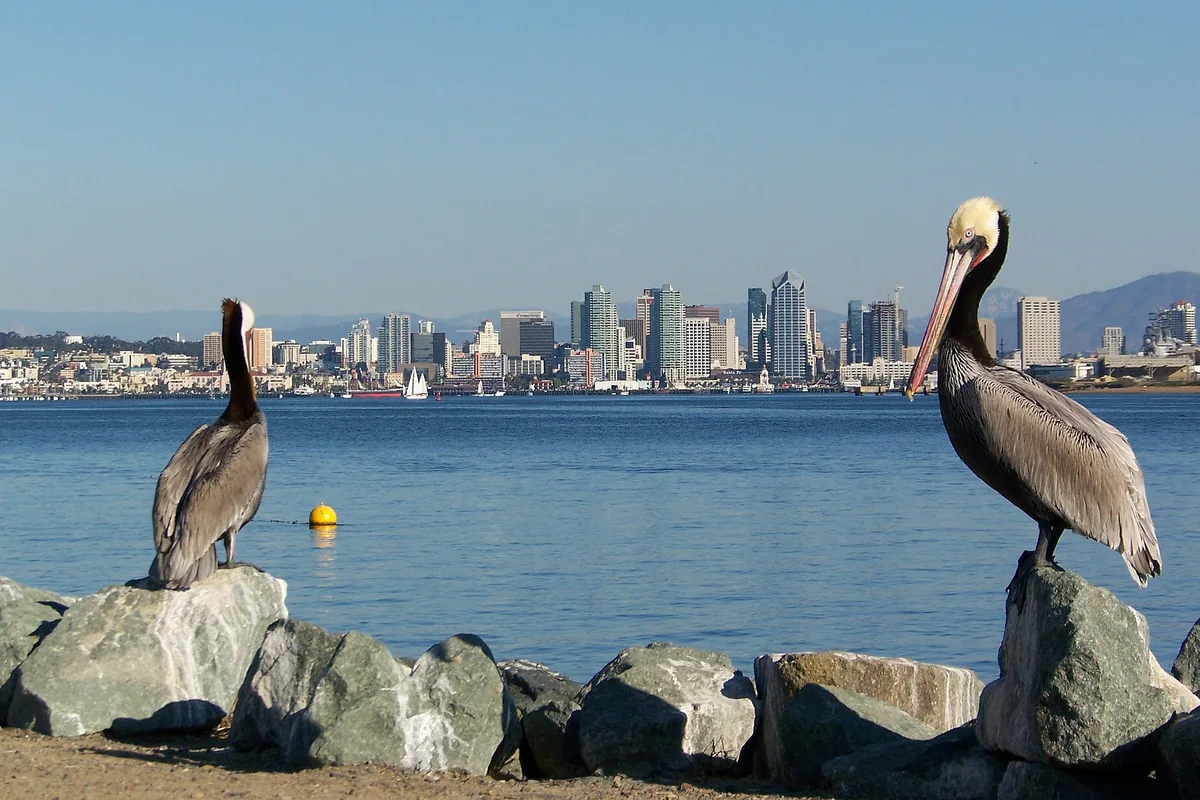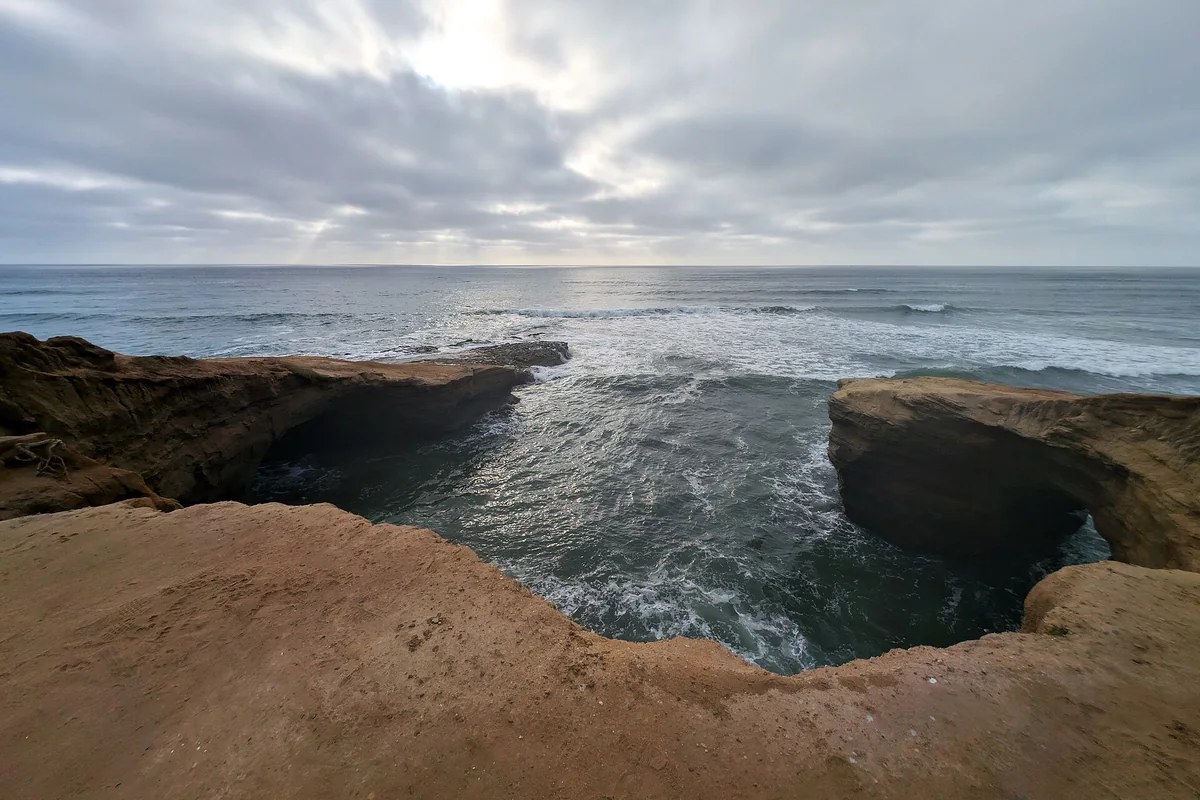
Garbage Beach in San Diego is a local name associated with the shoreline below Sunset Cliffs. It is not an invitation to scramble down the bluff or a guarantee of open access. This coast deserves careful tide planning: high water can erase the beach, and even a very low tide does not remove wave, cliff-collapse or slippery-rock hazards.
Garbage Beach and Sunset Cliffs Natural Park
Use the City of San Diego’s Sunset Cliffs Natural Park information to orient your visit. The park includes a dramatic, eroding coastal landscape, not a continuous developed beach promenade. A local beach nickname can describe a surf or shoreline area without identifying a maintained public access.
This guide does not establish that a particular stairway or descent is currently open. Access near Ladera Street has a history of cliff damage and repair, and old directions can outlast the route they describe. Read current signs and use only open, designated access. If a barrier is present, change the plan rather than following footprints, ropes or someone else down an informal trail.
What a king tide means
“King tide” is a familiar name for exceptionally high astronomical tides, not a separate kind of storm. The California Coastal Commission uses these events to help people observe high-water effects and consider future sea-level rise. Strong surf, storm surge and weather can compound the hazards, but a king-tide date alone does not describe the day’s waves.
For Sunset Cliffs, high water makes the beach below the bluffs a particularly poor place to stand. View from a lawful, setback location above, away from unstable edges. The purpose of watching is to observe where water reaches, not to put yourself in its path. Skip the outing if you cannot find a safe place to remain clear of the ocean and cliff edge.
Sunset Cliffs tides: plan the whole visit
Check NOAA’s La Jolla tide predictions for the date, then compare the National Weather Service coastal forecast. Note both the water level and its direction during your visit. A shoreline that is exposed at arrival may be submerged when you want to leave.
Treat a prediction as one input, not a pass to cross a rocky point. Wave run-up can reach far above the predicted still-water level. Leave a generous time margin and turn around while the return remains comfortable. Do not commit to a route that needs a specific wave gap, wading against a cliff or a climb you could not reverse safely.
Low tide at Sunset Cliffs
Low tide can reveal rock platforms and small pools that are hidden at higher water. It does not make the entire coastline walkable. The Coastal Commission specifically warns that unusually low tides can tempt people into sea caves and places where rising water or sneaker waves can trap them.
Stay out of caves and do not round a headland simply because other people are ahead of you. Wet rock may be slick, and a narrow patch of sand is not an emergency exit. If your group includes children or anyone unsure on uneven terrain, choose an easier established tide-pool access elsewhere. The tide-pool guide can help you compare outings without treating Sunset Cliffs as a required destination.
Sunset Cliffs tide pools: look without collecting
Where access is lawful and conditions are suitable, observe from stable footing and avoid stepping on living surfaces. Do not pry attached animals from rock, lift creatures for a photograph or move them between pools. Keep fingers out of crevices and watch the ocean while looking down. A second adult watching the water is useful, but it does not turn an unsafe platform into a safe one.
Close-toed shoes with traction are a better choice than smooth sandals. Keep pets and children away from edges and wildlife. If waves begin washing across the route, leave immediately by the open, designated exit. Do not wait for one more photograph or assume the next set will be smaller.
The king tide challenge: a photograph is optional
If “king tide challenge” brought you here, make safety the challenge, not proximity. The Coastal Commission’s king-tide safety guidance says to check conditions, know exits, stay away from the water and avoid unstable bluffs. Never stand on a seawall or exposed rock to create a more dramatic image.
Use a zoom from a safe setback and keep your attention on your footing. Obey closures, cones and caution tape. A photograph is not worth crossing a flooded road, walking to a cliff edge or remaining on a beach as the tide closes the exit. A simple park walk from an appropriate location can be the better choice.
A safer Sunset Cliffs outing
Arrive in daylight, check the signs and decide whether this is a bluff-top walk rather than a beach visit. Stay on established paths well back from the edge and do not use an eroding slope as a shortcut. Keep the route short enough to return before dark without rushing.
If the aim is sunset scenery, you do not need to reach the sand. If the aim is tide pooling, you do not need to force it on a high-surf day. Save the shoreline exploration for another visit and compare the family beach options when a simpler water-access setting is more appropriate.
Questions before you go
Is low tide automatically safe at Garbage Beach?
No. Surf, slippery rock, unstable cliffs and the return route matter as much as predicted water level. Use only open designated access.
Should I visit Sunset Cliffs tide pools during a king tide?
An exceptionally high tide is not a tide-pooling opportunity. The associated low tides can expose shoreline, but wave hazards and access restrictions still apply.
Sources & further reading
Official information and references for this guide. Check the source for current access, rules and conditions.