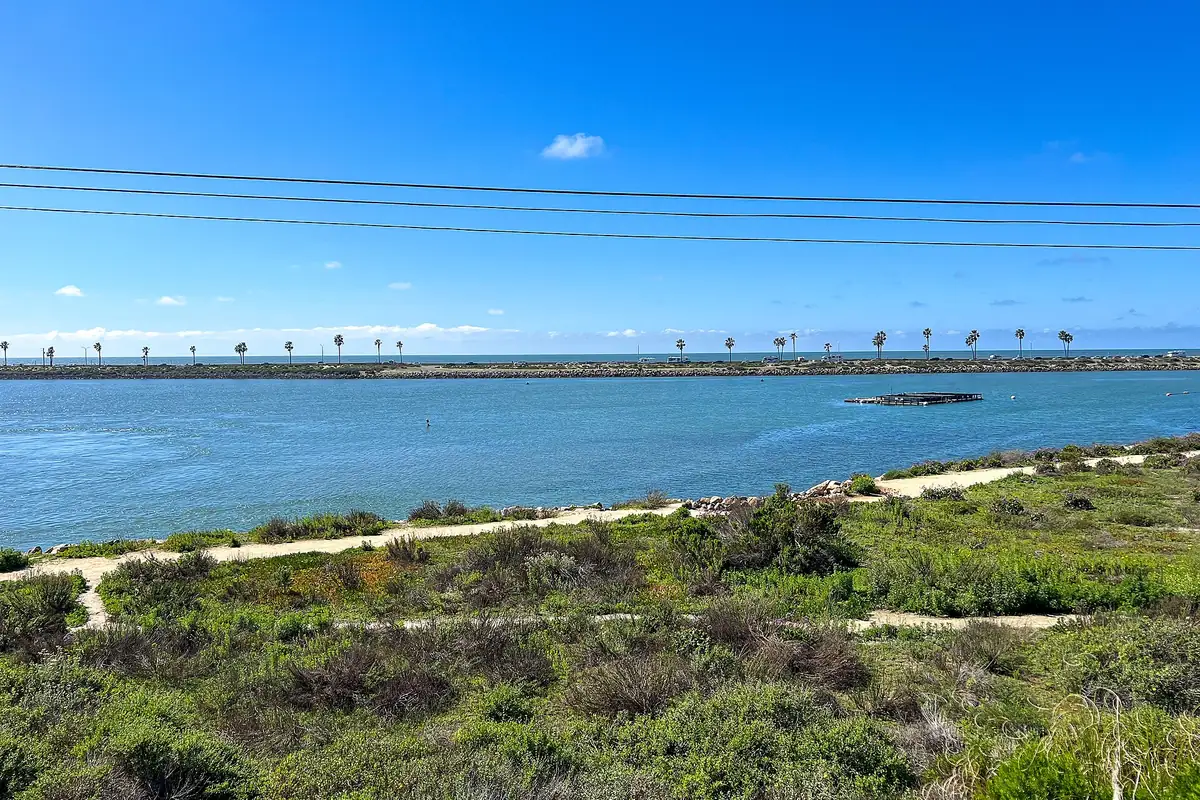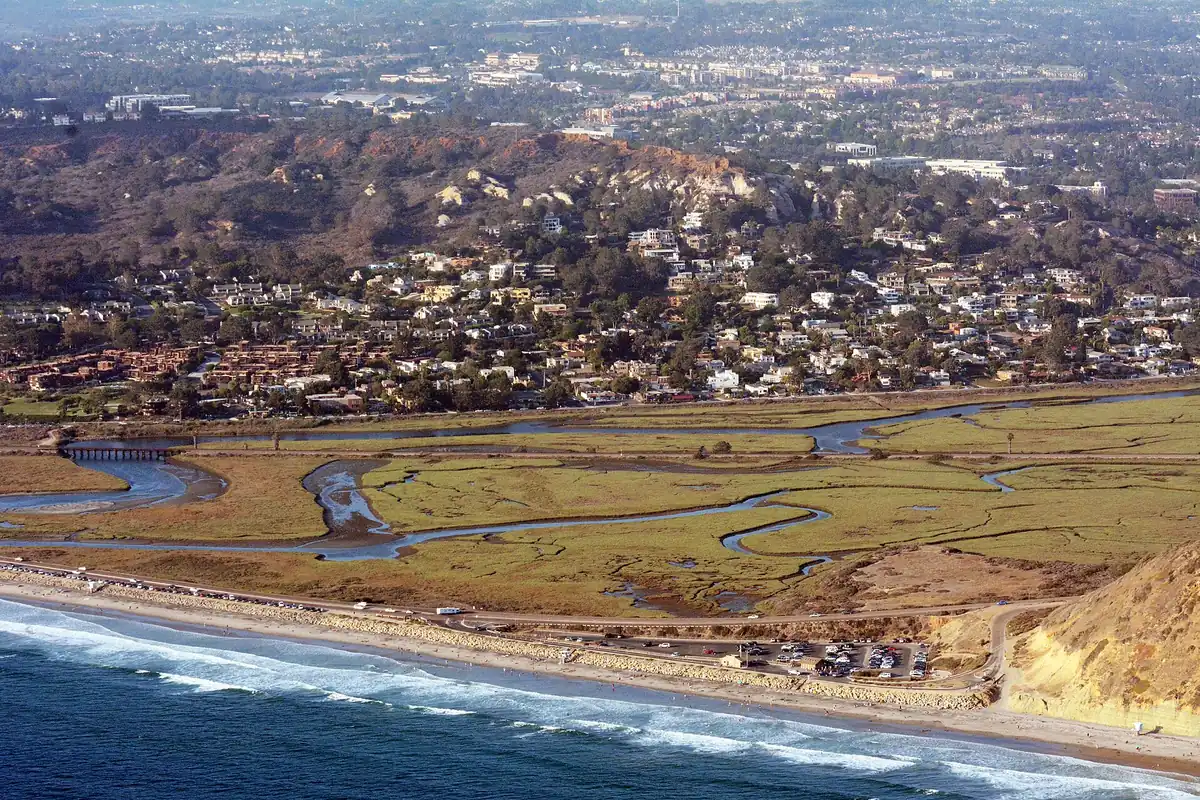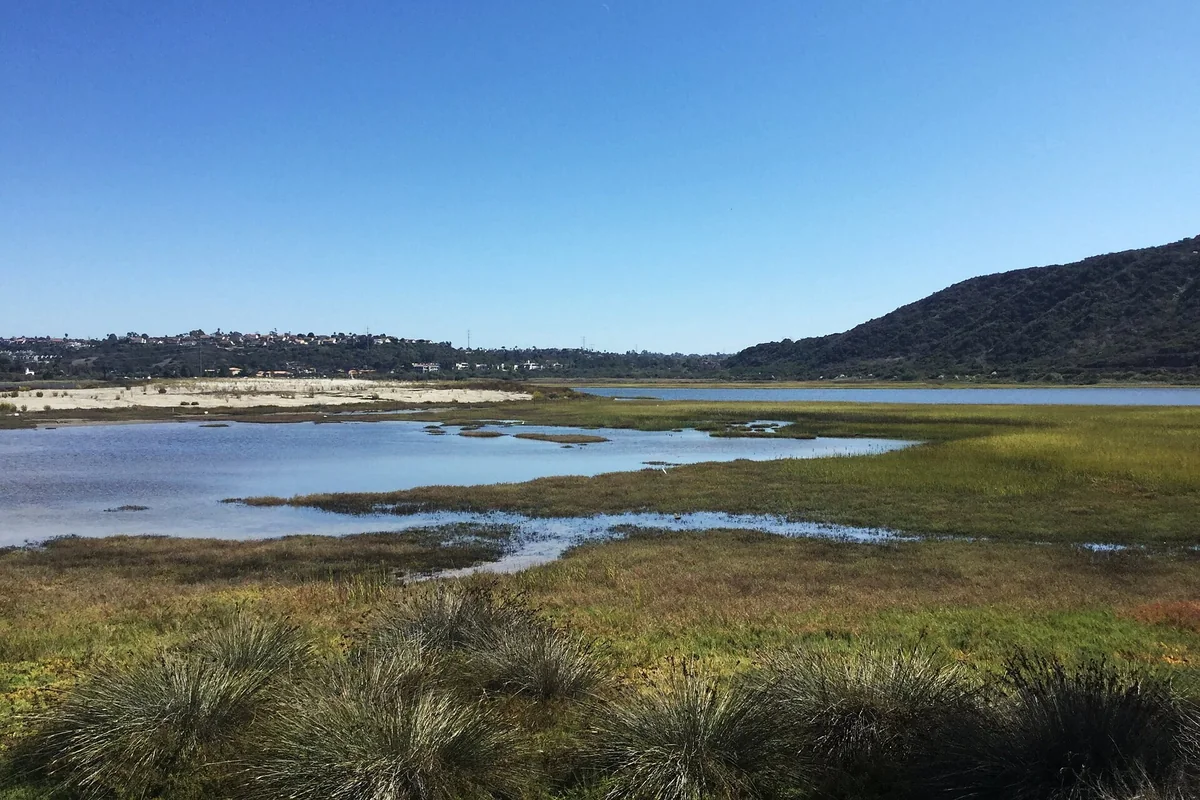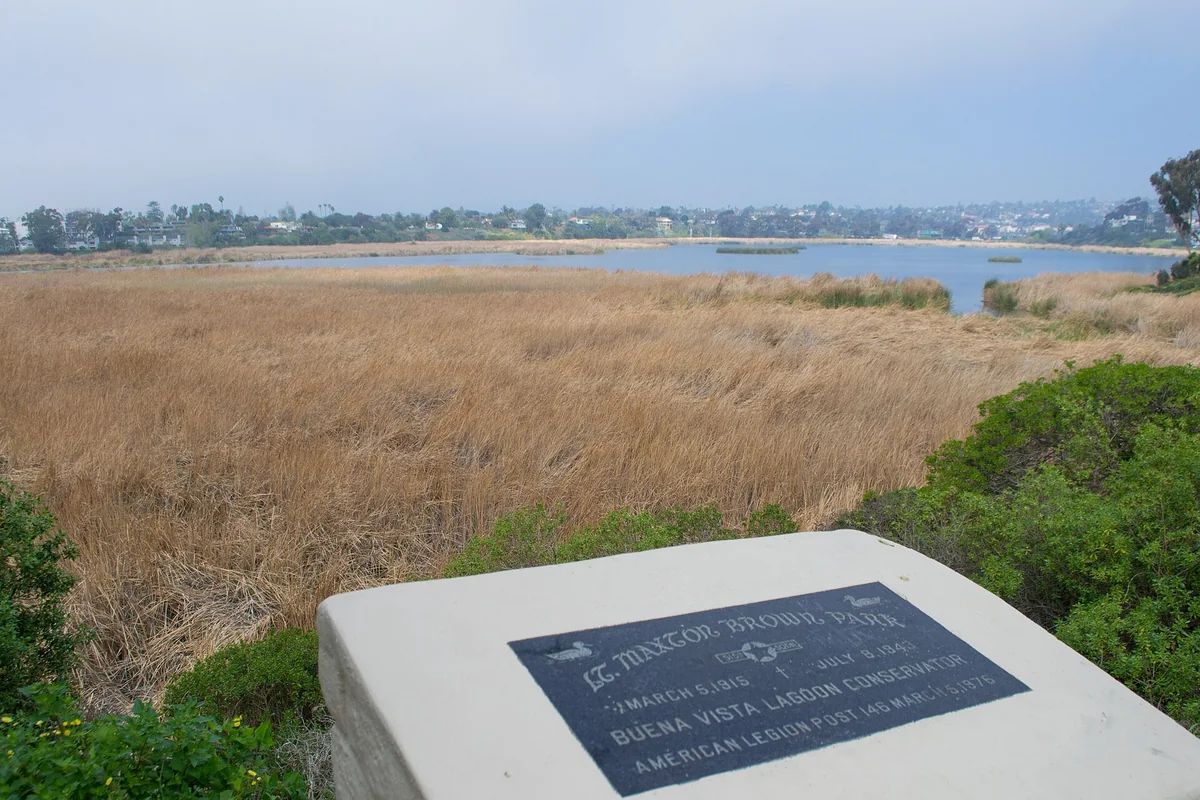
Buena Vista Lagoon is a good place for a short, observation-focused outing at the Oceanside–Carlsbad edge. Begin at the Buena Vista Audubon Society Nature Center rather than assuming there is a public path circling the whole lagoon. The center's exhibits and short nature trail offer a manageable introduction to the wetland, its birds and its plants. Bring binoculars if you have them, but patience is more useful than specialized equipment.
Buena Vista Lagoon Nature Center
The nature center is at 2202 South Coast Highway in Oceanside, beside Buena Vista Lagoon Ecological Reserve. Buena Vista Audubon describes interpretive wildlife displays, a natural-history library and a viewing deck added during its renovation. Check the official nature center page for current visitor hours before leaving. The center is staffed by volunteers, and the organization specifically advises calling ahead to confirm that a host is present.
That volunteer-run setting is a reason to arrive with a flexible plan. If the building is closed, do not assume someone will be along shortly to open it. Check the separate trail information and any posted restrictions. If an indoor exhibit visit is essential, confirm it first rather than driving over based on a search-engine hours box.
A short trail, not a full lagoon loop
The Audubon preserve has a roughly quarter-mile nature trail. Think of it as a compact place to look closely, not a mileage destination. The organization's eight-stop trail guide helps explain plant adaptations and lagoon habitats. Downloading the guide before arrival makes the signs more useful and gives children a clear sequence to follow without turning the walk into a race.
The phrase walking around Buena Vista Lagoon can be misleading if interpreted literally. This guide does not describe an uninterrupted public circuit of the entire lagoon. Roads, habitat boundaries and separate parcels make a casual map-based loop a poor assumption. Stay on the preserve's established route and do not follow an apparent shoreline opening into reeds or across private property.
Birding without disturbing the lagoon
Start by standing still near a permitted viewing point. Look at open water, vegetation edges and the air above the lagoon in turn. Each can reveal a different kind of movement. Audubon publishes bird checklists in English and Spanish, which are useful as possibilities rather than promises. No wild species is guaranteed to appear during a particular visit.
Keep a respectful distance and avoid playback, feeding or attempts to flush birds into flight for a photograph. If a bird repeatedly watches your movements or leaves a feeding spot as you approach, give it more room. A photograph of undisturbed behavior is a better souvenir than a closer image obtained by making an animal move.
The Buena Vista duck pond search
Some visitors arrive after searching for the Buena Vista duck pond. The lagoon should not be treated as a petting area or a place to distribute bread. Watching ducks and other waterbirds is a legitimate part of a nature visit; feeding them is not necessary to see them. Keep children close enough to prevent chasing and explain that wild animals choose their own distance.
Avoid assuming every patch of water with a similar name belongs to the same visitor site. Use the nature center's address and official trail description to confirm your destination. The names Buena Vista Lagoon Ecological Reserve and Buena Vista Creek Ecological Reserve should not be treated as interchangeable navigation instructions. A creek-area search may lead away from the lagoon-side nature center.
What to notice besides birds
The trail guide's focus on plants is a reminder that a wetland visit need not depend on a spectacular sighting. Notice how vegetation changes between a drier edge and places closer to water. Look for leaf shapes, growth forms and the shelter plants provide. Do not pick specimens to identify later; take a photograph or sketch the feature instead.
For families, choose one small question: which plants seem tallest, where is the most bird activity, or how does the view change after a few quiet minutes? Keep the exercise exploratory. The goal is not to turn a short walk into a classroom test, but to give everyone a reason to pay attention.
Planning a comfortable visit
Carry water, sun protection and footwear appropriate for the current trail surface. Ask the nature center about route conditions and accessibility if you need a specific surface, grade or restroom arrangement. A short distance alone does not establish wheelchair accessibility. Likewise, do not infer a pet policy from a photograph of someone walking an animal nearby.
Pair the center with only one other stop if your group prefers a relaxed pace. For a different lagoon education experience, see Agua Hedionda Lagoon's Discovery Campus. The two sites work well as separate outings, letting you compare observations rather than spend most of the day moving between parking lots. Our birding hub offers more places to build the same slow-looking habit.
Sources & further reading
Official information and references for this guide. Check the source for current access, rules and conditions.