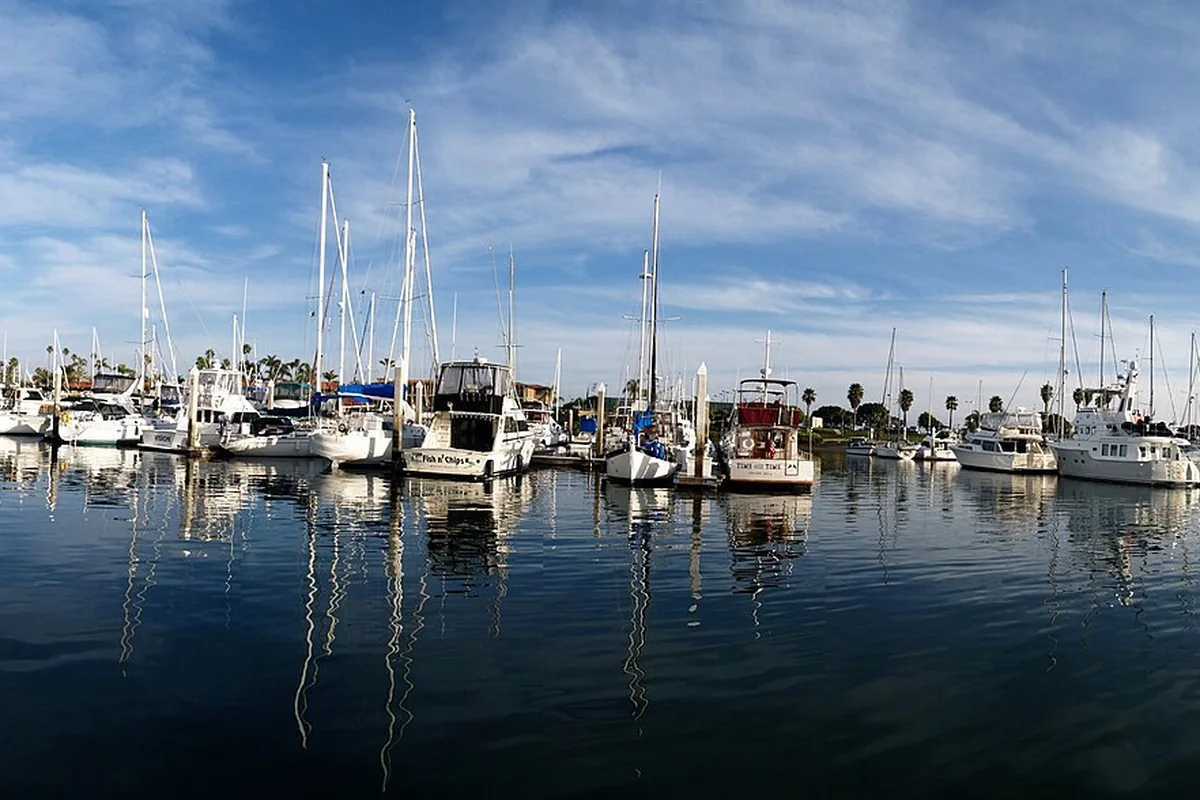
A boat ramp San Diego search often leads to Shelter Island, a public launch facility at the northwestern end of San Diego Bay. The Port of San Diego describes the ramp as providing the bay's closest launch access to the Pacific Ocean, approximately three miles away. That distance is useful context, not a trip-time estimate or an indication that the ocean entrance will be suitable for your boat on the day.
What the Shelter Island boat launch offers
The Port's official ramp page identifies a large parking lot and nearby restrooms. Use that page for the facility's location and any current notices. The old title referring to the new Shelter Island ramp describes an improvement project, not a promise that all facilities are newly installed or unaffected by maintenance.
Before towing over, check for closures, construction or event impacts. A map showing an open ramp symbol is not a substitute for current facility information. If the launch is essential to a charter, organized event or time-sensitive trip, confirm the relevant arrangements directly rather than relying on a past visitor's report.
Trailer parking is not ordinary waterfront parking
Shelter Island has rules specifically addressing vehicles and trailers. The Port's parking page says designated launch-ramp parking can allow up to 72 hours for vehicles with trailers attached. It also warns that separated vehicles or trailers can be cited or towed. Read the current signs carefully; a space available to a towing combination is not automatically available to a passenger car.
Do not generalize that rule to every lot on Shelter Island or to every San Diego Bay boat launch. The Port lists different arrangements for other facilities. Overnight parking in a waterfront park is not the same as parking a qualifying rig in a designated ramp space. If your plan involves leaving the vehicle for more than a day, resolve that question before launching.
Prepare away from the active ramp
Use the appropriate staging area to prepare the boat before joining the launch queue. Check the drain plug, tie-downs, safety equipment and the equipment specific to your vessel. Load bags and organize lines before backing down. The ramp is a transition space, not the place to unpack a vehicle or hold a full crew briefing while other boats wait.
Agree on roles in advance. The person driving the tow vehicle and the person controlling the boat need a clear plan and an agreed signal to stop. If either is inexperienced, practice the skills in a suitable setting before a busy launch day. This guide is a visitor-planning resource, not a substitute for boating instruction or the vessel manufacturer's directions.
Check conditions beyond the ramp
A protected-looking launch area does not establish conditions outside the bay. Review marine weather, visibility, tides and any local navigation notices for the entire intended route. Have the safety equipment, communications and fuel appropriate to that route. Decide what conditions will make you turn back before you feel pressure to continue because the boat is already in the water.
Our NOAA tide-data guide explains the difference between predictions and real-time conditions. A tide table alone cannot describe wind, waves, current at an entrance or a vessel's safe operating limits. If you cannot confidently evaluate those factors, choose a shore outing or obtain qualified instruction rather than treating a short offshore distance as reassurance.
Retrieval deserves its own plan
Before leaving the ramp area, decide how your group will manage the return. Have lines ready, identify where the driver will collect the tow vehicle and agree on communication if the loading area is busy. Wet gear, fatigue and changing wind can make retrieval feel very different from a calm morning launch.
After loading, clear the ramp promptly and use a designated space for securing gear and completing departure checks. Do not leave the boat unsecured simply to move faster, but do keep nonessential packing out of the active lane. Help from spectators should be welcome only when roles are clear; several people giving contradictory backing directions can make the situation less safe.
Other San Diego boat ramps
The Port's parking information identifies bay launch facilities at Shelter Island, Glorietta Bay, Pepper Park in National City and Chula Vista Bayfront Park. They are alternatives to research, not interchangeable sites with identical parking or access. Check each facility's current rules and whether it fits your towing vehicle and intended route.
Shelter Cove boat launch is a potentially confusing search phrase, because Shelter Cove and Shelter Island are not dependable substitutes in navigation. Use the official Shelter Island Boat Launch listing. For a non-boating companion outing, browse bayfront photography stops rather than assuming the ramp's working dock is a place to linger. Keep launch infrastructure available to the people actively using it.
Sources & further reading
Official information and references for this guide. Check the source for current access, rules and conditions.