The San Diego Bay National Wildlife Refuge protects about 2,620 acres of salt marsh, mudflats, salt ponds and shallow bay at the south end of San Diego Bay, and you can visit two parts of it for free. The Sweetwater Marsh Unit in Chula Vista has about 1.5 miles of trails reached only by the Living Coast Discovery Center's free shuttle, Wednesday through Sunday. The South San Diego Bay Unit in Imperial Beach is open along the Bayshore Bikeway, where a short birding trail looks over the salt ponds. Dogs are not allowed on the refuge.
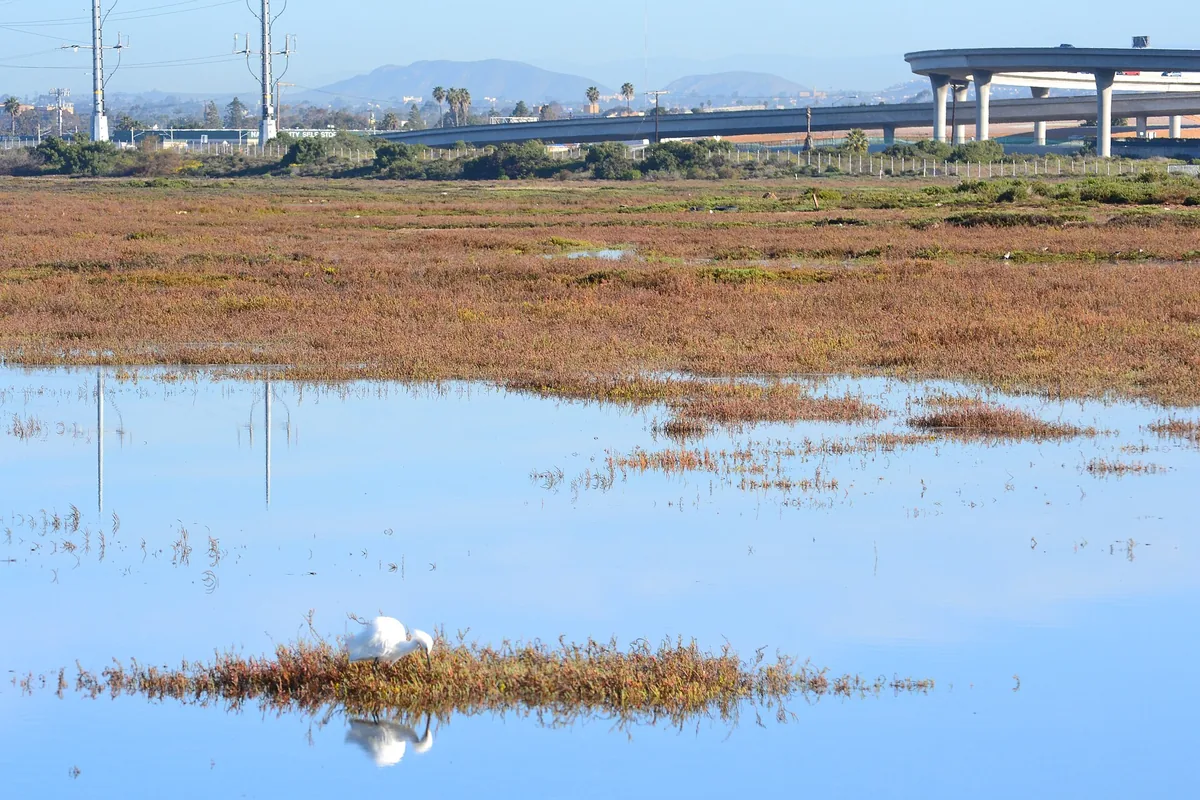
It is an urban refuge in the plainest sense: freeways, a marina and power lines frame the marsh. That is part of the point. The U.S. Fish and Wildlife Service manages it because most of the bay's original wetlands are gone, and what is left supports endangered birds a few minutes off Interstate 5.
Sweetwater Marsh or South Bay: which part to visit?
| Sweetwater Marsh Unit | South San Diego Bay Unit | |
|---|---|---|
| Where | Gunpowder Point, Chula Vista (I-5 at E Street) | Imperial Beach and the Silver Strand shoreline |
| Size | 316 acres, set aside in 1988 | About 2,300 acres, dedicated in 1999 |
| How you get in | Free Living Coast shuttle from the outer parking lot | Walk or bike the Bayshore Bikeway; park in town |
| When | Wednesday to Sunday, 10 a.m. to 5 p.m. | Along the public bikeway |
| Walking | About 1.5 miles of dirt trails through marsh and upland | The 0.4-mile Bayside Birding and Walking Trail, plus the paved bikeway |
| Best for | Families, a first visit, combining with the Living Coast exhibits | Shorebirds, terns and skimmers on the salt ponds; bike rides |
Walking the trails is free in both units. Only the Living Coast Discovery Center's exhibits charge admission.
How to visit the Sweetwater Marsh Unit
You cannot drive, walk or bike into Sweetwater Marsh. Private cars are kept off the refuge road, and the Living Coast Discovery Center says there is no safe walking or biking route in. Instead:
- Exit I-5 at E Street and head west onto Gunpowder Point Drive.
- Take the first exit at the traffic circle and turn left into the free parking lot.
- Wait for the Living Coast shuttle, which runs on a loop. The center lists the first pickup at 10 a.m., the last pickup from the lot at 4:30 p.m. and the last return from the center at 5 p.m.
Make sure you board the Living Coast shuttle, which carries the center's logo and animal artwork. The city's separate Bayfront Shuttle stops nearby but does not go to the center. Tell the driver you are walking the trails: the center says trail visitors do not need to pay admission.
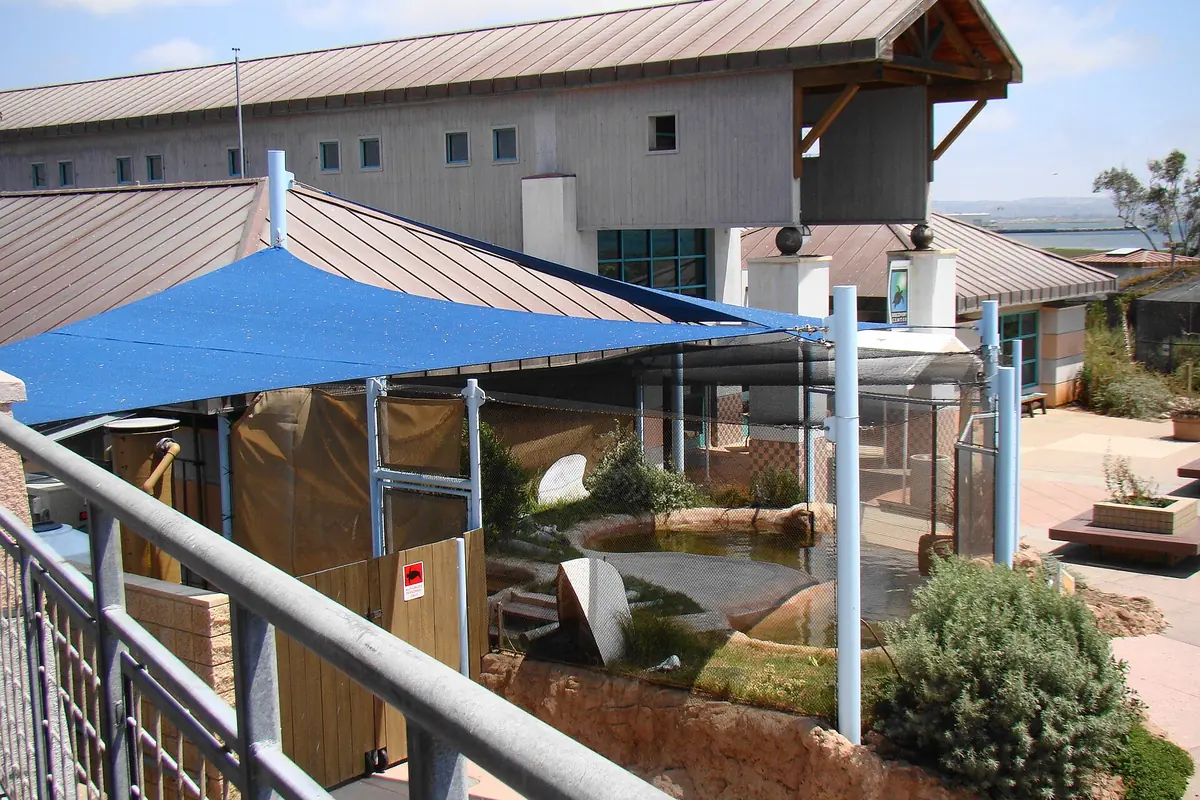
The trails start near the center and head west toward the bay over wide, flat dirt paths. The center describes its main marsh loop as about a mile and easy enough for strollers, while the Fish and Wildlife Service counts about 1.5 miles of trail in the unit. Spurs lead to bay overlooks, a pond and the mudflats. Restrooms are inside the center's front doors and are free to use.
The name Gunpowder Point comes from World War I, when a 30-acre kelp-processing plant on the site made potash for smokeless gunpowder, according to the refuge's description on Recreation.gov. Kumeyaay people fished, hunted and gathered here long before. Today the point also holds the headquarters of the San Diego National Wildlife Refuge Complex. For exhibits, animal presentations and the center itself, see our Living Coast Discovery Center guide.
How to visit the South San Diego Bay Unit
The larger South San Diego Bay Unit has no gate or visitor center. The Fish and Wildlife Service describes it as wrapped by the Bayshore Bikeway, which curves from the Silver Strand into Imperial Beach and past the salt ponds and the mouth of the Otay River.
For a short walk, the service suggests parking at 495 10th Street in Imperial Beach. From there, the Bayside Birding and Walking Trail runs about 0.4 miles alongside the bikeway between 10th and 7th streets. It is a dirt footpath with interpretive panels, and the refuge calls it stroller- and wheelchair-friendly. Having your own path matters: you can stop and set up binoculars or a scope without blocking cyclists. This is a residential neighborhood, so park considerately.
The pond at the end of 7th Street is a well-used eBird hotspot where black skimmers and gull-billed terns turn up far more often than elsewhere in the region. Local birders note that high tide on the bay tends to push the most birds onto the ponds.
For a longer outing, ride the Bayshore Bikeway, a loop of roughly 24 miles around the bay with long car-free stretches. Starting in Coronado puts the Silver Strand and the refuge in the middle of the ride. Our Coronado guide covers the start, and our San Diego Bay overview covers the rest of the shoreline.
What wildlife lives on the refuge?
More than 200 bird species have been recorded on the refuge. A few groups explain why it exists:
- Light-footed Ridgway's rail. This endangered marsh bird lives in the cordgrass. Sweetwater Marsh is the site of a captive-breeding program run with the Living Coast Discovery Center, SeaWorld San Diego and the San Diego Zoo Safari Park. Hundreds of rails raised there have been released into the wild.
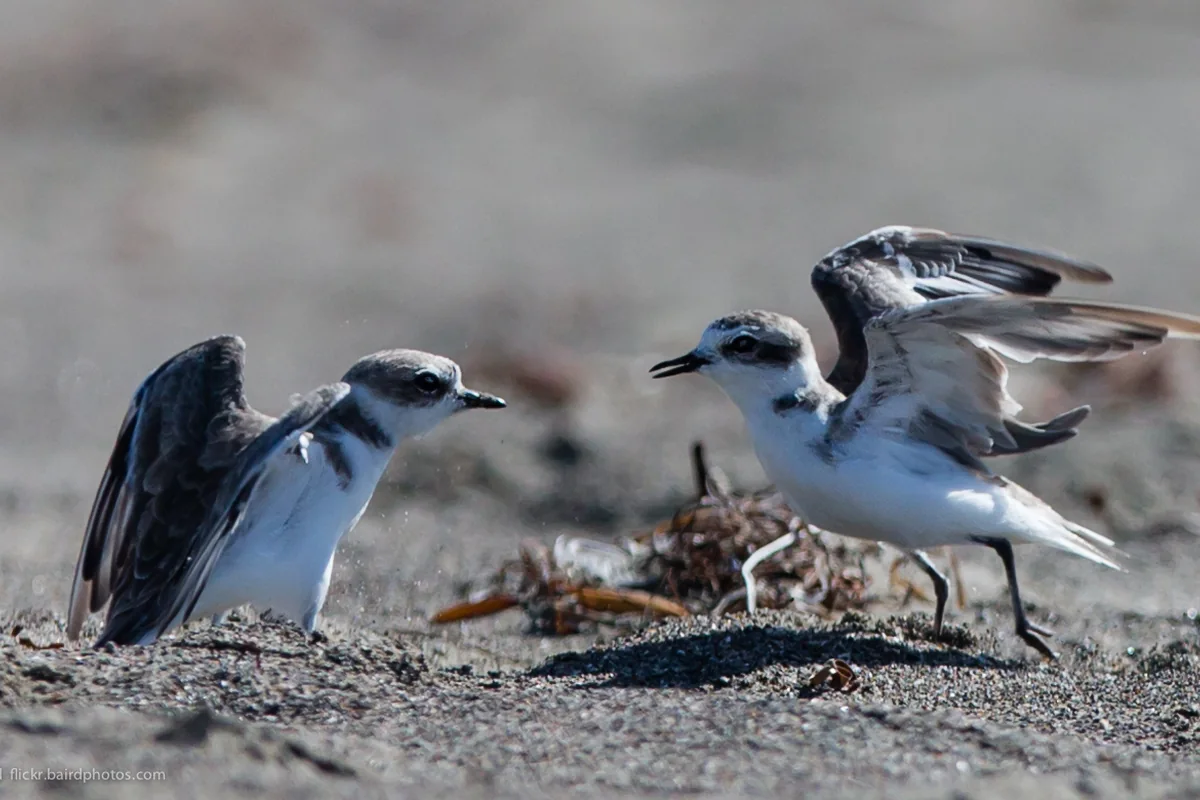
- California least tern and western snowy plover. Both nest on quiet, open ground buffered from the city. Read more about the plover, and why empty-looking sand is often off limits, in our western snowy plover guide.
- Colonial seabirds on the salt ponds. The South Bay salt evaporation ponds have been worked for more than a century. The service says their levees give nesting habitat to seven species of ground-nesting colonial seabirds, and the ponds feed tens of thousands of migrating birds.
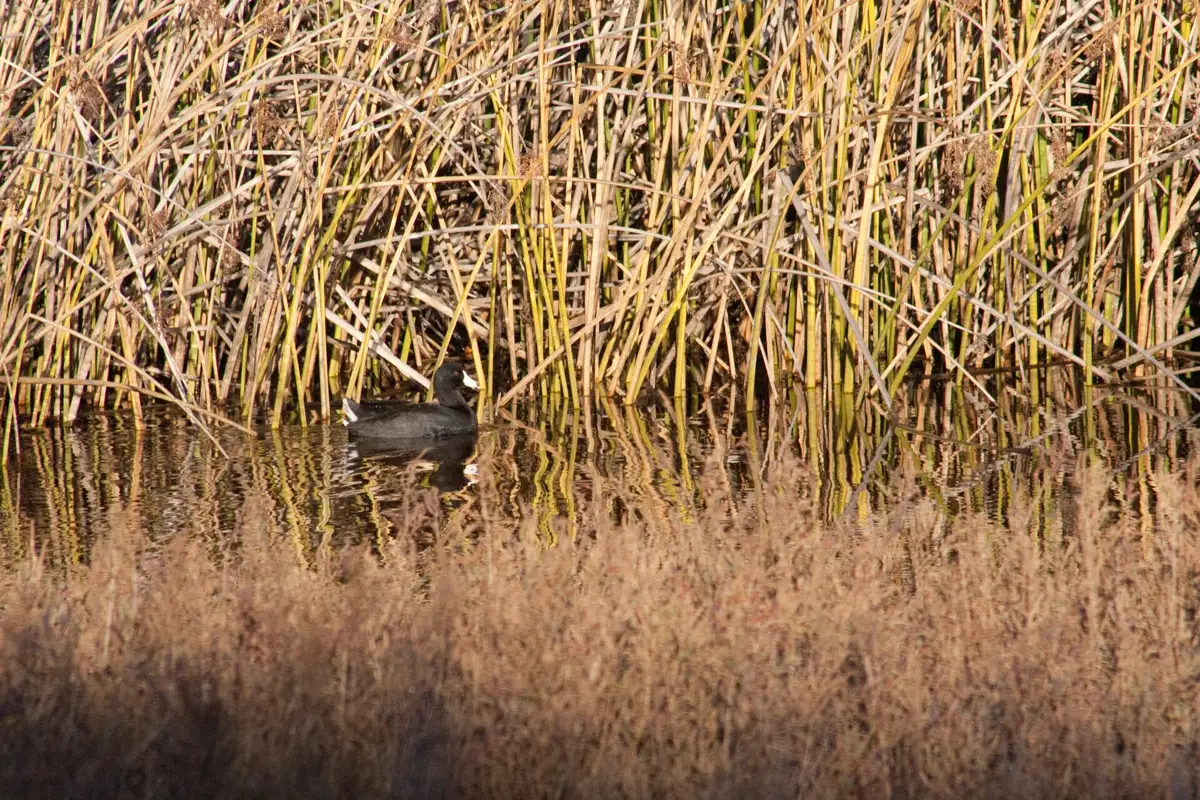
- Belding's savannah sparrow, osprey and belted kingfisher are among the other birds the refuge highlights.
- Rare plants. The endangered salt marsh bird's beak and Palmer's frankenia grow in the marsh.
The bay side matters too. The South Bay Unit's shallow water, eelgrass and the largest continuous mudflat in Southern California support fish that grow up in bays and estuaries, which in turn feed the terns, pelicans and herons you see diving.
When is the best time to go?
Fall and winter bring the biggest numbers. The refuge sits on the Pacific Flyway, and waterfowl and shorebirds stop over or spend the winter on the mudflats and ponds.
Spring and summer are nesting season. The Fish and Wildlife Service says California least terns are here from mid-April to mid-September. Watch from the trails and give nesting areas their distance.
Tides change the view more than the season. At a low tide, the mudflats spread out and shorebirds scatter to feed. On a high tide, birds crowd onto the remaining ground and the salt ponds, often closer to you. During extreme high tides, the bay floods well into Sweetwater Marsh, as in the photo above from a February 2011 tide. Our San Diego king tides guide lists this winter's biggest dates. The tide box on this page shows the next few days at La Jolla.
Morning light and calmer wind usually make scanning easier. On the Sweetwater side, remember the Monday and Tuesday closure.
Guided walks and programs
- Sweetwater Safari Hike. The Living Coast Discovery Center runs a free 30- to 45-minute guided walk on the marsh trail every Saturday, checking in at 11 a.m. at the center's front doors. On the third Saturday of the month, a San Diego Bird Alliance birder joins in with scopes.
- Ocean Connectors. This nonprofit lists guided birding walks on the Bayshore Bikeway in Imperial Beach and a wildlife kayak tour from Bayside Park in Chula Vista on its eco tours calendar.
- Volunteering. The Friends of San Diego Wildlife Refuges and the South Bay volunteer program help with walks and habitat restoration.
Check each organizer's calendar for current dates before you go. Programs change with the season.
Refuge rules worth knowing
- No dogs. Pets are not permitted on the refuge, including the Sweetwater trails and the Living Coast hikes.
- Stay on designated trails. Most of the refuge is closed to protect nesting and roosting birds. Do not walk onto levees, mudflats or salt ponds.
- Boats only in open-water areas. Kayaks and other boats may use designated open water inside the refuge boundary, not the salt marsh. The salt ponds and the eastern Otay River channel are closed to kayaks, paddleboards, kiteboards, jet skis and other watercraft.
- No feeding or approaching wildlife. If a bird changes what it is doing because of you, you are too close.
The official rules and policies page has the full list.
Is it the same as the San Diego National Wildlife Refuge?
No, and the names cause real confusion. The San Diego National Wildlife Refuge is a separate, inland refuge of about 12,445 acres, stretching from Jamul toward Spring Valley and eastern Chula Vista, with sage scrub, chaparral and oak woodland. Both refuges belong to the San Diego National Wildlife Refuge Complex. If you want salt marsh, shorebirds and bay views, you want San Diego Bay.
Make a day of it
Pair Sweetwater Marsh with the Living Coast's aviaries, or ride the bikeway to Imperial Beach for lunch and a look at the pier. Birders can add other wetlands from our San Diego birding hotspots list, including the Tijuana River estuary a few minutes south. For more marshes with trails and visitor centers, browse our guide to San Diego lagoons and nature centers or the birding section.
Questions before you go
Is the San Diego Bay National Wildlife Refuge free?
Yes. There is no fee to walk the trails at the Sweetwater Marsh Unit or the South San Diego Bay Unit. Only the Living Coast Discovery Center's exhibits charge admission, and trail visitors can ride its shuttle without buying a ticket.
How do you get to the Sweetwater Marsh trails?
Park in the free lot on Gunpowder Point Drive in Chula Vista (I-5 at E Street) and take the free Living Coast Discovery Center shuttle. You can't drive, walk or bike in. The shuttle runs Wednesday through Sunday, with the first pickup at 10 a.m. and the last at 4:30 p.m.
Are dogs allowed at the San Diego Bay National Wildlife Refuge?
No. The U.S. Fish and Wildlife Service does not permit dogs on the refuge.
Where can I see birds at the refuge without the shuttle?
Use the South San Diego Bay Unit in Imperial Beach. Park near 495 10th Street and walk the 0.4-mile Bayside Birding and Walking Trail beside the Bayshore Bikeway, which overlooks the salt ponds. The pond at 7th Street is a popular eBird hotspot.
Can you kayak in the San Diego Bay National Wildlife Refuge?
Only in designated open-water areas. Boats and kayaks are not allowed in the salt marsh, the salt ponds or the eastern Otay River channel.
Is San Diego Bay NWR the same as the San Diego National Wildlife Refuge?
No. The San Diego National Wildlife Refuge is a separate inland refuge around Jamul, Spring Valley and eastern Chula Vista. Both are part of the San Diego National Wildlife Refuge Complex.
Sources & further reading
Official information and references for this guide. Check the source for current access, rules and conditions.
- San Diego Bay National Wildlife Refuge – U.S. Fish & Wildlife Service
- Sweetwater Marsh Unit – U.S. Fish & Wildlife Service
- South San Diego Bay Unit – U.S. Fish & Wildlife Service
- Bayside Birding & Walking Trail – U.S. Fish & Wildlife Service
- Endangered Species Protection at San Diego Bay NWR – U.S. Fish & Wildlife Service
- Habitat & Wildlife at South San Diego Bay Unit – U.S. Fish & Wildlife Service
- Boating at San Diego Bay National Wildlife Refuge – U.S. Fish & Wildlife Service
- California Least Tern – U.S. Fish & Wildlife Service
- San Diego National Wildlife Refuge – U.S. Fish & Wildlife Service
- San Diego Bay National Wildlife Refuge – Recreation.gov
- Directions, Parking and Shuttle – Living Coast Discovery Center
- About Us (hours) – Living Coast Discovery Center
- Sweetwater Safari Hike – Living Coast Discovery Center
- Eco Tours – Ocean Connectors
- Bayshore Bikeway--7th Street (Ponds 10/10A) – eBird Hotspot
- The Bayshore Bikeway – San Diego Tourism Authority
- San Diego Bay – Resilient Wetlands Campaign (San Diego Nature)
- San Diego Bay National Wildlife Refuge – Wikipedia